Are Fad Diets the Solution?
Almost every fad diet out there has the following similarities: makes bold promises for fast weight loss, cuts out an entire food group or more than one food group, is hard to sustain, is nutritionally lacking, is commonly not safe for those with chronic illnesses, and has inconsistent scientific evidence.(3) Since most fad diets are hard to maintain, what usually ends up happening is that the person will give up on the diet or successfully lose some weight, thus stops adhering to the diet and eventually gains all the weight back.
This common experience is dubbed “yo-yo dieting”, also known as weight cycling. Going on another fad diet will not work; it will only cause the cycle to repeat itself. Frequent episodes of weight cycling over the course of years have been linked to higher levels of depressive symptoms, an increased risk of developing diabetes, insulin resistance, and cardiovascular diseases. (4), (5),(6),(7)
On top of all this, people who frequently go on diets are more likely to engage in binge eating. A longitudinal, prospective survey study was conducted to examine the following question: Can long-term dieting result in the onset of binge eating for adolescents and young adults?(8) A total of 1,827 participants were able to complete all the surveys at 5-year intervals.(8)
The results demonstrated that dieting powerfully predicted the onset of binge eating for both males and females.8 The study also revealed that dieters (those who followed a diet one to four times or more in the last year) were two to three times more likely to develop binge eating compared to participants who never went on a diet in the last year.(8) To add, the study took into account depression symptoms and low self-esteem and found that dieters with depression symptoms or low self-esteem were at an even higher risk of developing a binge-eating disorder.(8)
The overblown promises from fad diets only offer short-term relief, but never provide lasting freedom. Ergo, the diets don’t work, and you’re left feeling as though you have failed. When in reality, the unrealistic diet expectations have failed you. Maybe it is time to try a different approach.
Mindful Eating
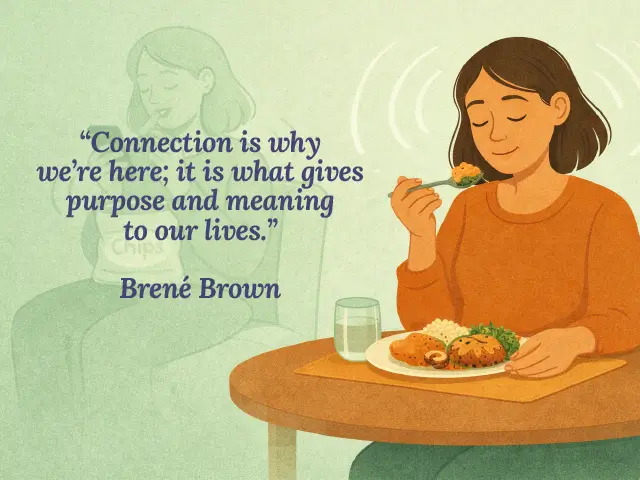
To be clear, mindful eating is not a diet. Mindful eating is meant to focus on how and why we eat.(9) Mindful eating is defined as holding complete attention, in a moment-to-moment fashion, whenever food is being eaten, while also removing all judgmental thoughts.(9)
This type of eating requires us to be in tuned with our bodies so that we may recognize our hunger and fullness cues. So many people struggle with racing thoughts stemming from the voice of the eating disorder, binge-eating disorder, bulimia nervosa, or just general anxiety. The practice of mindful eating encourages people to practice controlled breathing and turn off all electronic devices during meals.(9) Moreover, mindful eating is built on the following core principles:
- Savor the food
- Observe the food
- Remove all judgment
- Be present in the moment (9)
If you are interested in learning more about mindful eating or if you know someone who would benefit from mindful eating, please reach out to the FAB program. We have registered dietitians and therapists specializing in eating disorders and mindful eating who can assist you on your journey to overcome an eating disorder once and for all! Struggling with an eating disorder is not something you have to do alone. Connect with the FAB program today!
Take our simple two-minute quiz here and schedule a consultation with Dr. Jen to see if FAB might be a good fit for you!.
Citations
1- Kokkinos A, le Roux CW, Alexiadou K, et al. Eating Slowly Increases the Postprandial Response of the Anorexigenic Gut Hormones, Peptide YY and Glucagon-Like Peptide-1. The Journal of Clinical Endocrinology & Metabolism. 2010;95(1):333-337. doi:https://doi.org/10.1210/jc.2009-1018
2 – Dakanalis A, Mentzelou M, Papadopoulou SK, et al. The Association of Emotional Eating with Overweight/Obesity, Depression, Anxiety/Stress, and Dietary Patterns: A Review of the Current Clinical Evidence. Nutrients. 2023;15(5):1173. Published 2023 Feb 26. doi:10.3390/nu15051173
3- Tahreem A, Rakha A, Rabail R, et al. Fad Diets: Facts and Fiction. Front Nutr. 2022;9:960922. Published 2022 Jul 5. doi:10.3389/fnut.2022.960922
4- Quinn DM, Puhl RM, Reinka MA. Trying again (and again): Weight cycling and depressive symptoms in U.S. adults. PLoS One. 2020;15(9):e0239004. Published 2020 Sep 11. doi:10.1371/journal.pone.0239004
5- Madigan CD, Pavey T, Daley AJ, Jolly K, Brown WJ. Is weight cycling associated with adverse health outcomes? A cohort study. Preventive Medicine. 2018;108:47-52. doi:https://doi.org/10.1016/j.ypmed.2017.12.010
6- Zou H, Yin P, Liu L, et al. Association between weight cycling and risk of developing diabetes in adults: A systematic review and meta-analysis. J Diabetes Investig. 2021;12(4):625-632. doi:10.1111/jdi.13380
7- Rhee EJ. Weight Cycling and Its Cardiometabolic Impact. J Obes Metab Syndr. 2017;26(4):237-242. doi:10.7570/jomes.2017.26.4.237
8 – Goldschmidt AB, Wall M, Loth KA, Le Grange D, Neumark-Sztainer D. Which dieters are at risk for the onset of binge eating? A prospective study of adolescents and young adults. J Adolesc Health. 2012;51(1):86-92. doi:10.1016/j.jadohealth.2011.11.001
9 – Minari TP, Araújo-Filho GM, Tácito LHB, et al. Effects of Mindful Eating in Patients with Obesity and Binge Eating Disorder. Nutrients. 2024;16(6):884. Published 2024 Mar 19. doi:10.3390/nu16060884 https://pmc.ncbi.nlm.nih.gov/articles/PMC10975968/